
According to the World Health Organisation, excessive noise can disturb sleep, leading to decreased mental performance, and has even been linked to health issues, such as cardiovascular and hearing problems1. It means maintaining appropriate noise levels is critical for the wellbeing and comfort of a building's occupants.
Therefore, a sound reducing drainage system is important, especially for multi-storey and multi-occupancy buildings, where design and products are needed to reduce the noise created by soil and wastewater and so mitigate noise pollution.
It is why Aliaxis UK launched its own CIBSE approved Continuing Professional Development (CPD) programme that examines the benefits of using an acoustic drainage system.
The CPD takes a closer look at noise reduction in soil systems, explaining how every object in motion makes noise, transmitting vibrations in the form of pressure or negative pressure waves, to the surrounding air. Regulations covered include Building Regulations: Approved Document E and the background of sanitary standards.
The CPD looks at two types of noise in soil and waste systems:
Airbourne: This form of noise comes from pipelines, generated by wastewater flowing inside. In this case, a soundproof soil and waste system should limit the propagation of airborne noise and keep it inside the pipes. This is achieved by using a special material formula, utilising minerals, together with a multi-layer pipe structure that is correctly installed.
Structure-borne: This type of noise comes from the pipes and fittings as well as the system of fixing them to the building’s structure. The noise therefore comes from inside the system, through acoustic resonance, which is transmitted through a system of pipe brackets to the building’s structure and heard in neighbouring rooms as an irritating acoustic wave. In this case, it is important to design the system of fixing pipes and fittings to the building’s structure in such a way that the transmission of the acoustic resonance to its walls is reduced to the minimum.
It is why the CPD takes a closer look at tight socket and gasket connections and how acoustic bracket options, such as the dBlue bracket and the patented acoustic body bracket, Phonoklip®, designed within the Aliaxis R&D laboratory, absorb noise generated from pipework into the building structure.
A further section of the CPD looks at how the noise level of the dBlue system was measured using the Fraunhofer test, with test and noise measurements conducted according to the European standard EN 14366.
The CPD also provides a deeper dive into everyday noise, which includes a list of acceptable noise levels measured in decibels (dB) in rooms used on a daily basis, including examples such as accommodation in residential buildings, boarding schools, children’s homes, care homes and hotels 4 star and above which should be 35dB by day and 25dB by night.
Further comparisons are made on the potential effect noise can have on human health in our everyday surroundings, such as car alarms at 90dB, compared with dBlue at 16dB, with typical applications for dBlue in apartments, hospitals, hotels, libraries, public buildings, restaurants and student accommodation.
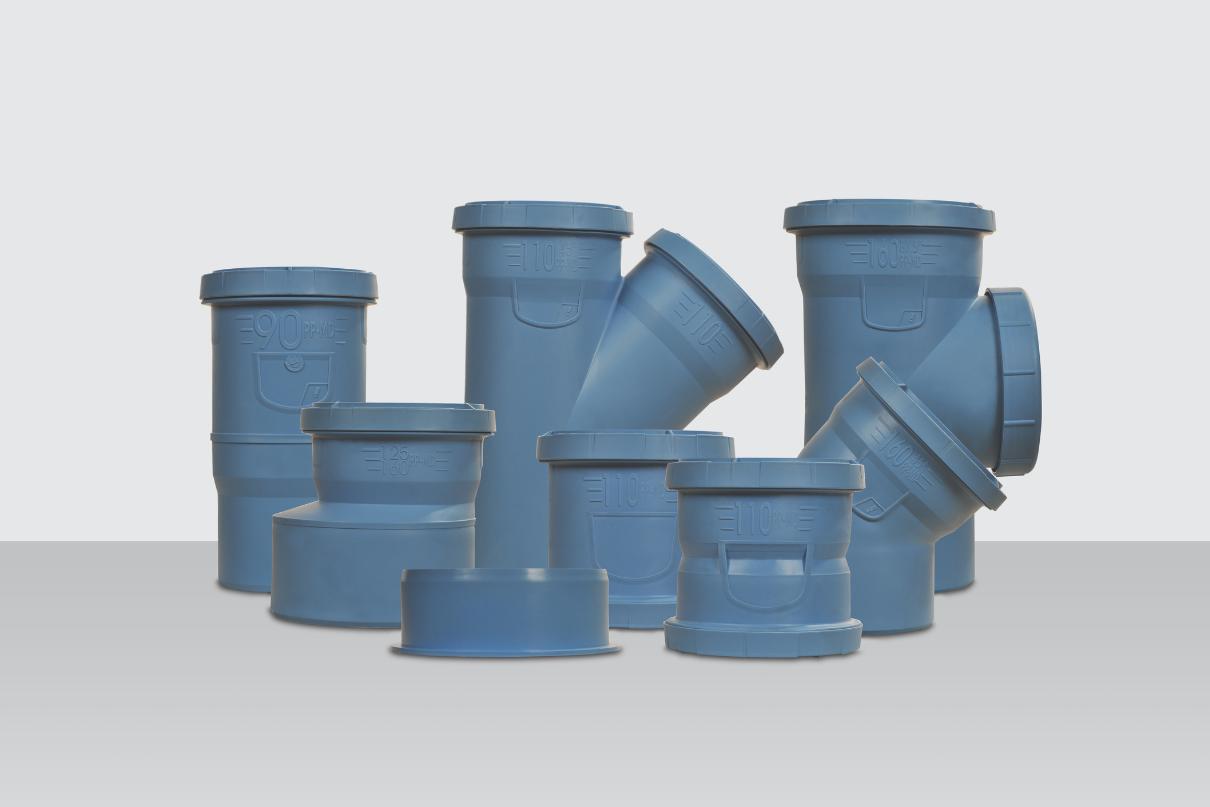
The CPD also examines the triple-layer pipe structure of a dBlue pipe, which is produced using co-extrusion. It means the propagation of noise generated by wastewater flowing inside the pipework is severely limited by the nature of the pipe construction. Each of the three layers making up the dBlue system has an individual function - the internal layer is resistant to high temperatures of +90C and has high chemical resistance, while the middle layer is additionally reinforced with minerals and offers noise reduction, and the outer layer has resistance to external tensions and atmospheric factors.
Key features of dBlue are also discussed including how it is quick and easy to install, provides the hygienic removal of sanitary wastewater, dramatically reduces the sound of wastewater, and is compatible with the PVCu soil and waste system for branch connection.
A major component of dBlue is its secure push-fit jointing system, and a section of the CPD looks at materials and jointing methods employed for the dBlue system, mainly ring seal (push-fit) and some solvent-weld waste connections. Push-fit connections are extremely reliable, as the joint can accommodate thermal movement that will occur as a result of temperature variations.
A case study is also discussed, as well as the technical services support Aliaxis UK can provide, designing the most efficient drainage system for a project, plus its fabrication offering.
Aliaxis UK’s suite of Continuing Professional Development programmes, also includes a CIBSE approved CPD on Active Drainage Ventilation in High-Rise Buildings.
The process to sign up for a CPD session is straightforward and simply involves completing an online application form, after which the sales team will liaise on dates, time, and place. The CPDs are free to attend and expert-led, with certificates provided following completion of the course.